
How to catalogue German books
Scan the barcode or photograph the shelf. German-language books are also looked up in the national library catalogue, so the edition on your shelf fills in.
Try TitleEntry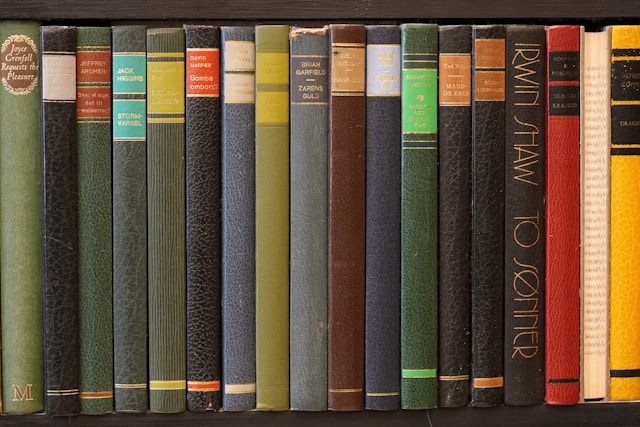
German-language books are thoroughly catalogued at home, and patchily in the databases most scanning apps rely on, which are built around English-language stock. A barcode that has a full record in Germany can come back elsewhere with no publisher, no year and no page count. TitleEntry asks the national library catalogue about every German ISBN as well, so those gaps fill in. For English stock, see cataloguing English-language books.
Cataloguing German books in three steps
Scan the ISBN
Use a USB scanner or your phone camera on the barcode. ISBNs beginning 978-3, or 3 on older 10-digit books, are looked up in the national library catalogue alongside the usual book databases. When that catalogue holds the same edition, its publisher, year, page count and language are the ones kept.
Photograph the spines
Take a photo of a whole shelf, or send up to 20 photos at once. When a spine reads as German and the usual databases have no match, TitleEntry searches the national catalogue by title and author, and the publisher or series printed on the spine chooses the edition.
Check and keep
Correct anything that needs it, in the review or later in the catalogue. Search works with or without umlauts: typing Muller finds Müller.
How each scanner works in detail: the ISBN scanner and the AI bookshelf scanner.
Publishers, imprints and series
The spine names the series
German paperbacks are often known by their series as much as their publisher: a yellow Reclam spine, a Suhrkamp taschenbuch, a Fischer Taschenbuch. TitleEntry compares what the spine shows with both the publisher and the series in each catalogue record, so a paperback is matched to an edition from that same house.
No matching edition, no ISBN
When the spine shows a publisher and no edition from that publisher turns up, the book is kept with its title and author and the ISBN left blank, instead of taking another publisher’s number. A wrong ISBN brings a wrong cover and wrong details with it; a blank one is quick to fill in from the book.
What a German ISBN tells you
Registration group 3 is the German language area. Germany, Austria, Switzerland, Liechtenstein and Luxembourg share it, so a book from a Vienna or Zurich publisher usually begins 978-3 as well. Older books carry a 10-digit ISBN beginning with 3, which TitleEntry reads the same way as the 13-digit form.
The group shows where the publisher is registered, not the language inside the book, which is why language is kept as a field of its own. German books printed before the ISBN came into use in the 1970s have no barcode at all: photograph the shelf, or the title page of each book, as described in cataloguing old books.
Cataloguing French stock as well? See how to catalogue French books.
A shelf of German books to catalogue?
Send us a photo of one shelf and we will show you what TitleEntry makes of it.
Get in touchFrequently asked questions
German-language publishers in Austria and Switzerland register their books in group 3 as German ones do, so their barcodes begin 978-3 and are looked up the same way, national catalogue included.
Yes. Titles, authors and publishers keep their umlauts and ß in the catalogue, in the Excel export and in the MARC records libraries can export.
No. Search ignores umlauts and accents, so Ubersetzung finds Übersetzung and Gotz finds Götz.
Yes. Each book records its language and the catalogue filters by it, so the German section can be listed on its own whenever you need it.
Photograph its title page and the details are read from the book itself, or type them in. Small presses and privately printed books often need this.
Tell us roughly how many books you have and where they are, using the contact form, and we will set up an account for you.
Last verified 28 October 2026. Source: List of ISBN registration groups, group 3 (German language area).