
How to catalogue French books
Scan the barcode or photograph the shelf. French ISBNs are also looked up in the national library catalogue, older 10-digit ones included.
Try TitleEntry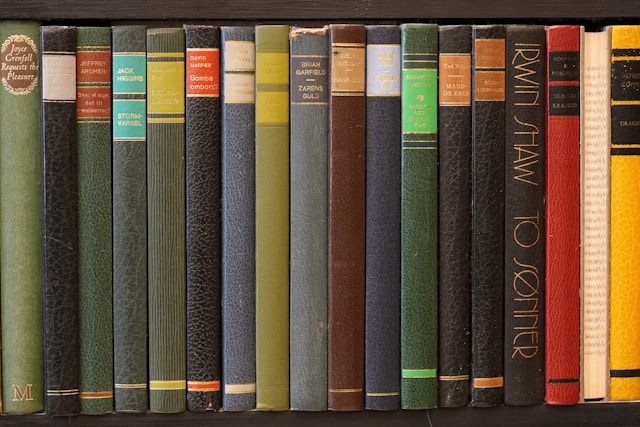
French books carry their publishing history in their numbers. A paperback from the 1970s has a 10-digit ISBN, a recent one a 13-digit ISBN beginning 978-2 or 979-10, and the databases most apps rely on hold only part of either. TitleEntry also asks the national library catalogue about every French ISBN, and fills in the details from the record for that edition. For other languages, see German books and English-language books.
Cataloguing French books in three steps
Scan the barcode
With a USB scanner or the phone camera. A French ISBN, 978-2 or 979-10, is checked in the national library catalogue at the same time as the usual databases. When the catalogue holds that exact edition, its record supplies the publisher, year and page count.
Photograph a shelf
Shelf photos work for French stock too, up to 20 photos in a batch. When a spine reads as French and no database has a match, the national catalogue is searched by title and author, and the edition is chosen from what the spine shows.
Review the list
Fix any detail before or after saving. Every accent is kept as printed, and search is accent-free, so etranger finds L’Étranger.
The two ways in, step by step: the ISBN scanner for barcodes and the AI bookshelf scanner for shelf photos.
Collections and older numbers
Folio is Gallimard
A French paperback spine usually shows the collection: Folio, Le Livre de Poche, Pocket, J’ai lu, GF. The publisher behind it can be another name entirely, Gallimard for Folio, Librairie Générale Française for Le Livre de Poche. TitleEntry checks the collection in each catalogue record as well as the publisher, so a spine that says only Folio still finds a Folio edition.
The 10-digit paperback
Books printed before 2007 carry a 10-digit ISBN beginning with 2, and the national catalogue can file those records under the 10-digit number alone, where a search with the 13-digit form finds nothing. TitleEntry asks with both forms, so a 1970s paperback is looked up properly too.
What a French ISBN tells you
Group 2 is the French language area, shared by France, Belgium, Switzerland, Luxembourg and Canada. France also has a second prefix, 979-10, for newer books. Every group-2 and 979-10 barcode is checked in the national catalogue, wherever the publisher is based.
The prefix tells you where a publisher is registered rather than the language of the text, so TitleEntry stores language separately. Books from before the ISBN, such as old livres de prix or a family’s nineteenth-century library, have no number to scan: catalogue them from the spine or the title page, as cataloguing old books explains.
French stock waiting on the shelves?
Tell us what you have and we will run a few of your books through TitleEntry with you.
Get in touchFrequently asked questions
Their publishers use group 2 as well, so the barcodes are checked in the national catalogue in the same way. The usual book databases are asked too, so a title published in Brussels or Montreal can be found there.
Yes. A 10-digit ISBN beginning with 2 is read, its check digit verified, and the book looked up under both its old and its new number.
Every accent and cedilla is stored as printed and appears in the Excel export, and in MARC records for libraries. When searching you can type Etranger or Étranger.
Every book records its language, and the catalogue filters by it, so the French titles can be listed on their own in one step.
Photograph its title page and the details are copied from the book, or type them in by hand. Self-published and very old books often need this.
Send a short note through the contact form with the size of your French collection, and we will create your account.
Last verified 28 October 2026. Source: List of ISBN registration groups, group 2 (French language area) and 979-10 (France).